Early pay via Swish: 7 questions to ask before choosing a provider
Evaluating early wage payments via Swish in Sweden? Check how providers handle approved hours, fees, corrections and your regular payroll.
On Thursday, an employee asks if she can access part of her pay that day. She worked late the night before but forgot to clock out. What amount should she see in the app while her manager is still confirming when she finished?
Use that case when comparing early pay providers. Ask each provider to show what happens from the missing clock-out to the withdrawal and then through regular payroll. That’s where you’ll see how much work falls to the manager and the person running payroll.
Here, early pay via Swish means giving employees the option to access part of the wages they’ve already earned through Sweden’s Swish payment service before their usual payday. It’s also known as pay on demand. For an introduction to the payment process, read our guide to paying wages via Swish.
1. When do hours worked become available for withdrawal?
Ask the provider to show a shift scheduled from 16:00 to 23:00 where the employee worked until 23:30 but forgot to clock out. What appears in the app before the manager confirms the finishing time? What changes after the hours are approved?
For teams with variable shifts, verified hours are a good starting point. Find out whether approving the hours makes the amount available or whether someone needs to approve the withdrawal separately.
2. How is the available amount calculated?
Ten hours at SEK 150 per hour gives SEK 1,500 in gross pay before any supplements. That doesn’t tell you how much the employee can withdraw.
Ask the provider which figures go into the calculation. How do tax withholding, unsocial-hours premiums, previous withdrawals and withdrawal limits affect it? What happens if a supplement hasn’t been confirmed? Can you explain the amount to the employee in plain language?
3. What can employees see before they withdraw?
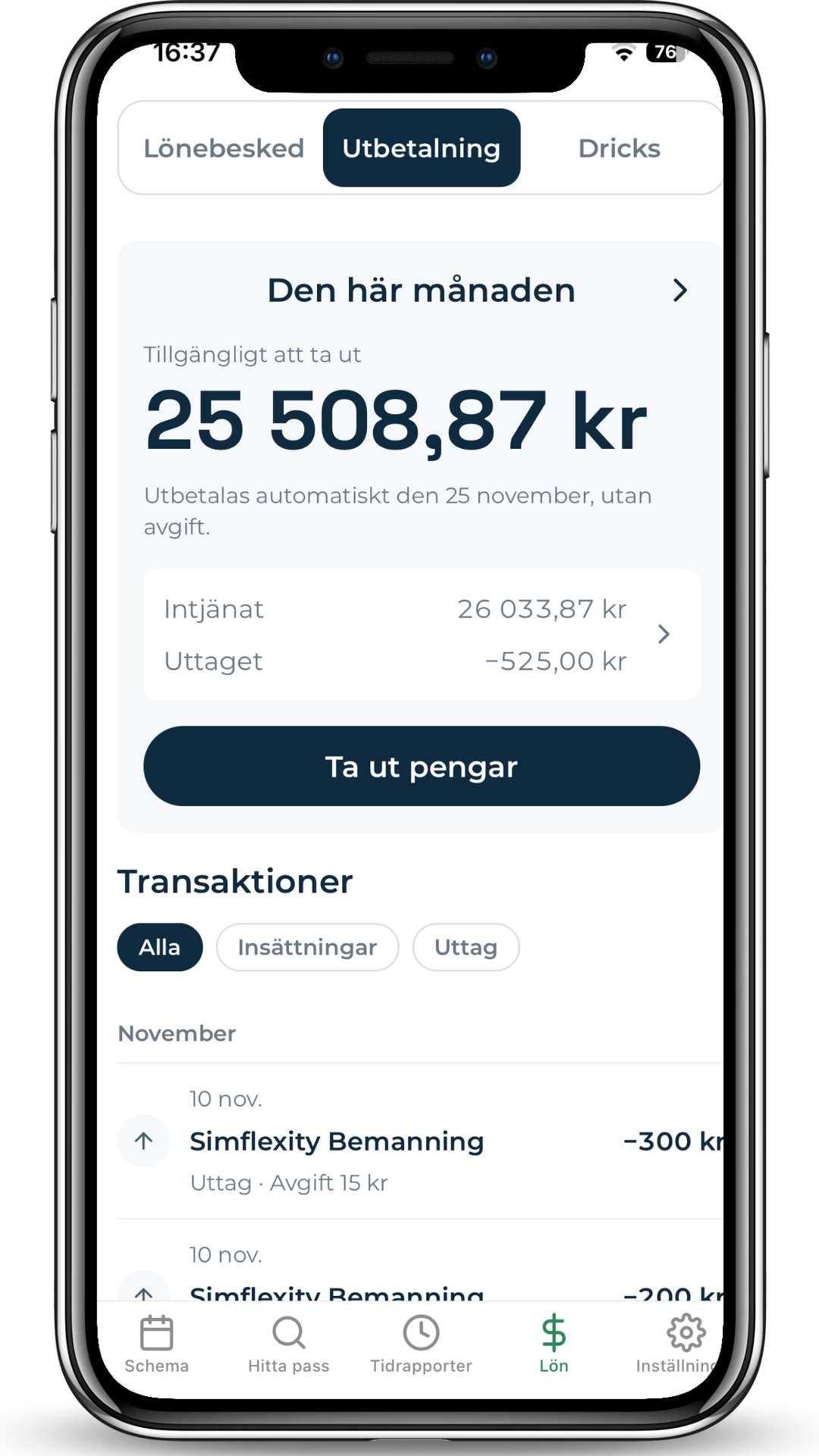
Let someone on the team try the app. Can they see what they’ve earned, what they’ve already withdrawn, what’s available now and what the withdrawal costs? If there’s a fee, ask who pays it and how much actually reaches the employee’s account. It should also be clear what happens if they wait until their usual payday.
4. What happens if hours are corrected after payment?
Try a case where the manager discovers a missing break after a withdrawal has gone through. Can payroll see the original record, the correction and the completed payment? Who needs to act if the corrected records result in a lower amount?
Ask the provider to show what the system handles and what needs to be done manually. Correcting a timesheet doesn’t change a payment that has already gone through.
5. How are withdrawals reconciled with regular payroll?
Follow one early payment through the payroll records, the payslip and the amount paid on payday. The person running payroll should be able to tell what has already been paid and what remains. The employee should be able to see why their usual payday payment differs from what they would have received in a single payment.
Also test a case where the withdrawal and regular payment fall in different calendar months. Swish is the payment method. Swedish tax withholding, employer contributions and reporting still need to be handled correctly. Ask the provider and your payroll lead to explain how each payment should be reported. See the Swedish Tax Agency’s guidance on employer declarations and payment deadlines (in Swedish).
6. Who funds the withdrawals and when does the business pay?
Ask who funds each withdrawal, when money is reserved or debited and what limits apply. Run the numbers for a week when several employees make withdrawals. Can you see what’s due to go out and what remains for regular payroll? Include any fees in the comparison.
7. Who helps if a payment doesn’t go through?
Ask to see how the service distinguishes pending, failed and completed withdrawals. What can employees see? Who follows up? How do you check the payment status before trying again, so the same amount isn’t sent twice?
Test one shift and one withdrawal before you decide
Bring three things to the demo: a typical shift, a late correction and a previous withdrawal. Ask the provider to show what the employee, manager and payroll lead see at each step. If hours are often still missing when you run payroll, start by fixing how timesheets are submitted and approved before introducing early withdrawals.
With Simflexity Pay, employees can see earned wages, previous withdrawals and the amount available in the app. When their employer enables the optional service, they can choose to withdraw available wages via Swish before their usual payday. Bring a shift from your own business to a walkthrough.
Related reading
A monthly payroll routine for small businesses with hourly staff